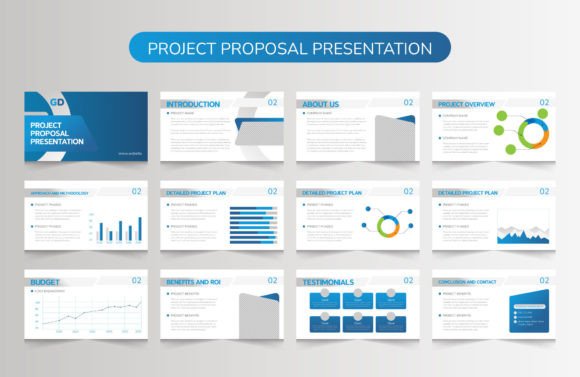
How to Use a Project Proposal Presentation Slide to Clarify Ideas and Win Support
A well-structured proposal can determine whether an idea moves forward or stalls. But a document alone rarely carries the weight of a compelling visual narrative. This is where a Project Proposal Presentation Slide becomes a practical tool for anyone who needs to communicate a plan clearly and persuasively. Whether you are pitching to a client, seeking internal approval, or aligning a team around a new initiative, the way you present your proposal matters as much as the content itself.
At its core, a Project Proposal Presentation Slide is a visual framework that distills complex information into digestible, focused messages. It is not merely a slide deck. It is a strategic asset that helps you organize your thinking, anticipate questions, and guide your audience toward a decision. When used thoughtfully, it becomes a bridge between your vision and your stakeholder’s understanding. This article explores why this tool matters, how to use it with intention, and what to consider before relying on it for your next proposal.
Why a Project Proposal Presentation Slide Is Strategically Useful
The value of a Project Proposal Presentation Slide lies in its ability to reduce friction. Every proposal faces a common challenge: the audience has limited time, shifting priorities, and a natural skepticism toward new ideas. A slide that presents your project clearly, with logical flow and visual hierarchy, helps your audience grasp the essentials quickly. It respects their time and makes it easier for them to say yes.
From a strategic standpoint, this kind of presentation supports several critical functions. It forces you to define your objectives before you design a single slide. You must decide what problem you are solving, what outcomes you expect, and what resources you need. That clarity is invaluable, even before you present to anyone. The act of building the slide becomes a planning exercise that reveals gaps, assumptions, and risks you might otherwise overlook.
Beyond internal clarity, the slide serves as a communication tool that aligns stakeholders around a shared understanding. A well-organized Project Proposal Presentation Slide reduces misinterpretation. When everyone sees the same timeline, budget breakdown, and success metrics, the conversation shifts from confusion to action. This is particularly useful in cross-functional teams where different departments bring different priorities to the table.
When to Use a Project Proposal Presentation Slide
Knowing when to use this format is as important as knowing how to build it. Not every idea needs a formal slide deck. But there are specific scenarios where a Project Proposal Presentation Slide adds disproportionate value. These include:
- Pitching to external clients or investors: A professional slide signals that you have done your homework and respect their time. It builds credibility before you speak a word.
- Seeking internal approval for resources or budget: Decision-makers in organizations rely on structured information. A slide that clearly outlines costs, timelines, and expected returns makes it easier for them to evaluate your request.
- Aligning a project team at the outset: When everyone involved sees the same scope, roles, and milestones, you reduce the risk of misalignment later. The slide becomes a reference document that keeps the team on track.
- Presenting to a review board or steering committee: These audiences often have limited time and high standards. A concise, visually organized slide helps you make your case without overwhelming them with details.
- Responding to an RFP or formal request: A tailored presentation slide demonstrates that you understand the requester’s needs and have thought through your approach carefully.
In each of these cases, the slide is not the deliverable. It is the medium through which you build alignment, trust, and momentum. The decision to use it should come from a clear assessment of your audience’s needs and your own communication goals.
How to Approach Building a Project Proposal Presentation Slide
Building a slide that works requires more than dragging elements into a template. The most effective presentations are built from a strategic foundation. Start by defining the single most important message you want your audience to remember. Everything else on the slide should support that message. If a data point, image, or bullet point does not reinforce your core argument, it probably does not belong there.
Structure matters. A logical flow typically moves from problem to solution to implementation. You might begin with the context or pain point, then present your proposed approach, followed by the expected outcomes, and finally the resources required. This narrative arc mirrors how most people naturally evaluate proposals: first they need to understand why something matters, then how it will work, and finally what it will cost.
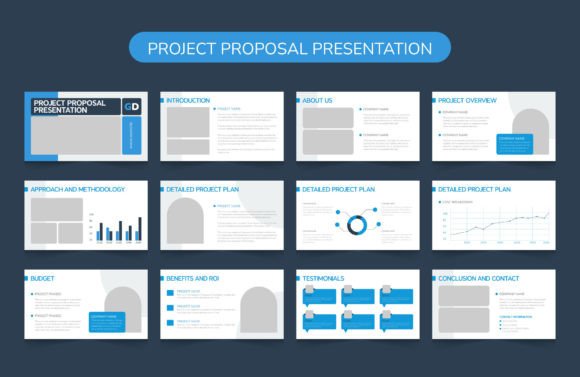
Visual design is not decoration. It is a functional tool that guides attention. Use consistent typography, a restrained color palette, and clear hierarchy. Avoid cluttering the slide with too much text or too many graphics. Each element should have a purpose. Many presenters benefit from using templates in formats like AI or EPS files, which offer well-organized layers and easy editing. These files allow you to focus on content rather than starting from scratch. However, the template is only as good as the thinking behind it. A clean design cannot rescue unclear logic.
Practical Planning Tips for Using Vector Templates
If you choose to work with a vector-based template for your Project Proposal Presentation Slide, consider a few practical steps. First, treat the template as a starting point, not a final design. Customize it to reflect your brand colors, typography, and visual style. Generic templates can feel impersonal, which undermines the trust you are trying to build.
Second, take advantage of the organized layers that well-constructed AI and EPS files offer. These layers let you isolate individual elements, adjust spacing, and rearrange components without breaking the design. This is especially useful when you need to iterate quickly based on feedback.
Third, be mindful of images. Many templates include placeholder visuals that are not part of the purchase. You will need to supply your own relevant images. Avoid generic stock photos that do not connect to your proposal’s context. Instead, use diagrams, charts, or simple icons that reinforce your data and narrative. If you do not have custom visuals, consider using clean typography and white space as your primary design elements.
The Strategic Role of Visuals in a Project Proposal Presentation Slide
Visuals are not just aesthetic additions. They serve a cognitive function. When you present data in a chart rather than a table, you help your audience process trends quickly. When you use a timeline graphic, you make the sequence of events tangible. A well-placed diagram can replace paragraphs of explanation.
However, every visual should earn its place. Ask yourself whether a given graphic clarifies a point or adds cognitive load. If the answer is the latter, remove it. The goal is not to impress with design skill but to make your proposal easier to understand and act upon. Infographic elements, when used sparingly, can highlight key metrics or illustrate a process. But too many visuals can distract from your core message. Restraint is a sign of strategic thinking.
Risks of Using a Project Proposal Presentation Slide Without Clear Goals
Even a beautifully designed slide can fail if it lacks a clear purpose. One of the most common mistakes is using a Project Proposal Presentation Slide without first defining what success looks like for that specific presentation. If you do not know what you want your audience to think, feel, or do after seeing your slide, you are likely to include too much information, use the wrong tone, or miss the emotional hook that drives decisions.
Another risk is over-designing at the expense of substance. When you spend more time adjusting colors and animations than sharpening your argument, the final product may look polished but feel hollow. Audiences quickly sense when style outweighs substance. This erodes credibility rather than building it.
There is also the risk of template dependency. If you rely on the same structure for every proposal, you may stop thinking critically about what each unique audience needs. A template should never replace strategic adaptation. Each proposal is a new conversation with a different stakeholder, context, and set of constraints. Your slide must reflect that specificity.
How to Use a Project Proposal Presentation Slide Intentionally
Using this tool intentionally means starting with strategy, not design. Before you open any software, define your objective. Are you seeking approval, feedback, funding, or partnership? Each goal calls for a different emphasis. A funding proposal might highlight ROI and risk mitigation, while a team alignment slide might focus on scope, roles, and milestones.
Next, understand your audience. What do they already know? What are their concerns? What language do they use? Tailoring your slide to their perspective increases the likelihood of resonance. This does not mean telling them what they want to hear. It means framing your proposal in terms that matter to them.
Then, draft your narrative. Write out your key points in sequence before designing anything. This ensures that your slide structure follows a clear logic rather than being dictated by available graphics. Once your narrative is solid, you can select a template that supports that flow. Templates with well-organized layers make it easy to adapt the visual structure to your specific content.
Long-Term Value of Building Skills Around Proposal Presentations
Investing time in learning how to build and deliver a strong Project Proposal Presentation Slide pays dividends beyond any single pitch. Each time you go through the process, you sharpen your ability to distill complexity, anticipate objections, and communicate with precision. These skills transfer to other areas: client meetings, internal updates, conference talks, and even written proposals.
Over time, you will build a library of reusable templates and visual approaches that save you hours on future projects. You will also develop a reputation for clarity and professionalism. In environments where ideas compete for attention, being able to present a proposal clearly and persuasively is a competitive advantage.
Final Considerations for Decision-Makers and Practitioners
A Project Proposal Presentation Slide is not a magic solution. It is a tool that amplifies good thinking but cannot replace it. If you approach it with clear goals, a deep understanding of your audience, and a willingness to iterate, it becomes one of the most effective ways to move an idea from concept to commitment.
For entrepreneurs, freelancers, and small business owners, this tool is especially valuable because it forces discipline. You cannot afford to waste a pitch. Every meeting is an opportunity to build trust and advance a project. A well-crafted slide helps you make the most of that opportunity without relying on charisma alone.
For educators, marketers, and professionals within larger organizations, the same principles apply. Whether you are proposing a new campaign, a process change, or a learning initiative, the ability to present your idea visually and logically increases your influence. It also reduces the friction that often stops good ideas from moving forward.
The next time you prepare a proposal, consider not just what you want to say, but how you want your audience to experience your idea. Let the structure of your Project Proposal Presentation Slide serve that experience. The best slides are not remembered for their design. They are remembered because they made a complex idea feel simple and a risky idea feel safe. That is the strategic value of presenting with intention.