Why Sports Illustration Flat Design Works for Modern Projects
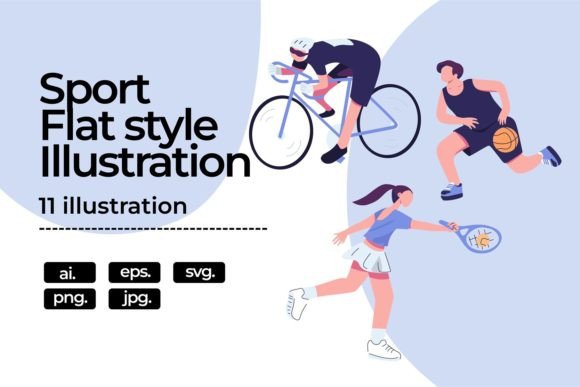
If you have ever tried to communicate a sports concept visually, you know how quickly things can get complicated. Realistic photography often clutters the message. Stock photos look generic. Custom photography takes time and money. That is where Sports Illustration Flat Design steps in as a clean, adaptable, and professional alternative. This particular pack offers 11 sport categories in flat style, delivered across five formats, making it one of the more versatile collections I have come across for both digital and print projects.
Flat design has been a staple in modern visual communication for years. Its strength lies in stripping away unnecessary detail so the viewer focuses on the core subject. When applied to sports, this approach works exceptionally well. The human eye instantly recognises the motion, the equipment, and the activity without being distracted by shading, texture, or background noise. Whether you work in marketing, education, content creation, or product design, these illustrations can save you hours of production time while keeping your materials looking polished and intentional.
What Makes This Sports Illustration Pack Stand Out
Before diving into use cases, it helps to understand what you are actually getting with this set. The pack includes eleven distinct sport categories, each illustrated in a cohesive flat style. This consistency across all icons means you can mix and match them on a single page, infographic, or presentation without visual clash. The illustrations come in EPS, AI, SVG, PNG, and JPG formats. That coverage alone removes most compatibility headaches. Whether you work in Adobe Illustrator, a web tool like Figma or Canva, or directly in HTML and CSS with SVG, there is a format that fits your workflow.
Colour handling is another practical advantage. The assets use RGB colour space out of the box, which works perfectly for screens, websites, and digital presentations. If you need to shift to CMYK for print material, the editable colour layers make that conversion straightforward. You do not need to rebuild the artwork or lose quality. This flexibility matters if your project moves from a digital mood board to a printed brochure or a large-format poster.
Eleven Sport Categories Covered
While the exact list of sports may vary depending on the version of the pack, a typical set covers a broad range of popular activities. Expect to find illustrations for football, basketball, tennis, swimming, cycling, running, baseball, volleyball, hockey, skiing, and maybe boxing or gymnastics. This variety means you can handle multi-sport projects, such as event programmes, fitness centre brochures, school athletic handouts, or tournament websites, all from one asset pack. You do not need to hunt down separate illustrators for each sport, which saves both time and money.
Practical Applications Across Different Fields
One of the best aspects of Sports Illustration Flat Design is how naturally it fits into a wide range of contexts. It does not lock you into a single use case. Here are several realistic scenarios where this pack can deliver value.
Website and App Design
If you run a sports club, fitness app, or event platform, loading pages with heavy photography can slow performance. SVG and PNG illustrations from this pack load quickly and scale cleanly across devices. You can use them as hero image replacements, category icons, or section dividers. Because the style is flat and modern, it tends to look fresh for years compared to more trend-driven illustration styles. I have seen similar packs used on gym membership pages, tournament bracket screens, and even ecommerce product categories for sportswear. The result is a consistent visual language that feels intentional, not thrown together.
Presentations and Pitch Decks
Presentations often suffer from generic clip art or dense text slides. Dropping a relevant flat illustration into a slide gives your audience an immediate visual anchor. For example, if you are presenting a quarterly report on a school's sports programme, using the tennis icon on the tennis budget slide and the swimming icon on the pool maintenance slide helps viewers follow along without reading every word. The EPS and AI formats make it easy to recolour the illustrations to match your brand palette or slide theme.
Infographics and Educational Materials
Educators and bloggers will find the Sports Illustration Flat Design pack useful for breaking down complex concepts. Imagine explaining the rules of volleyball to beginners. You can pair each rule with the corresponding flat icon at the top of the section. The same applies to fitness guides, training schedules, or nutritional advice for athletes. The illustrations serve as visual cues that improve retention without overwhelming the reader. In a classroom setting, these icons printed as flashcards or posters work well for younger students who respond to bold, recognisable shapes.
Social Media and Content Marketing
Social media managers often need fresh visuals quickly. Flat illustrations perform well on Instagram, LinkedIn, Facebook, and Twitter because they stand out in busy feeds. You can use them in carousel posts, story highlights, or as featured images for blog links. Because the pack includes multiple formats, you can export a PNG for Instagram and an SVG for your website without recreating the artwork. Over time, building a library of consistent visual assets gives your brand a recognisable style, which supports engagement and recall.
Printed Collateral and Merchandise
Do not overlook print. With editable colour and CMYK-ready layers, you can take these illustrations into flyers, posters, banners, programmes, and even apparel mockups. A local sports league could use the football and basketball illustrations for season schedule posters. A school could print them on event T-shirts or welcome packets. The flat style reduces ink usage compared to complex gradients or photographic prints, which may save a little on production costs at scale.
Usability and Efficiency Gains
From a workflow standpoint, having all five formats in one download means you do not waste time converting files. The SVG format is particularly useful if you work with web developers. It scales to any size without losing resolution and can be styled with CSS for hover effects or animations. The AI and EPS files give Adobe users full control over paths and colours. PNG and JPG cover quick exports for anyone who just needs a ready-to-use image without opening a vector editor.
Editable colour is a feature that deserves explicit mention. Many illustration packs lock colours or flatten layers. This one does not. You can change the uniform colours, backgrounds, and accent tones to align with a brand guideline, a seasonal campaign, or a personal preference. If you manage multiple client accounts, you can duplicate the file and recolour each version in minutes. That kind of flexibility turns a one-time purchase into a reusable resource across dozens of projects.
Considerations When Using Flat Sports Illustrations
While this style works well for most modern contexts, a few practical considerations will help you get the best results.
First, match the illustration style to your overall design language. If your website or brand uses heavily textured backgrounds, detailed photography, or ornate typography, flat icons may feel disconnected unless you adjust the surrounding elements. Flat design pairs best with clean layouts, sans-serif fonts, and solid or subtle gradient backgrounds. You may need to simplify your existing visuals to let the illustrations shine.
Second, consider audience expectations. For highly professional or formal sports documentation such as medical reports, legal agreements, or elite coaching manuals, flat illustrations might feel too casual. In those cases, you may prefer restrained use, perhaps as secondary visual accents rather than primary imagery. Conversely, for youth programmes, community events, and digital content aimed at general audiences, the flat style feels approachable and modern.
Third, check the licence terms for commercial use. Most asset packs allow you to use the illustrations in client work and products, but restrictions may apply to reselling the raw files or using them in trademarked logos. Read the included licence file to avoid surprises. If you work as a freelancer or agency, this step protects both you and your clients.
Final Observations and Recommendations
I have used similar flat illustration packs across multiple projects over the years, and the sports category is one of the most requested by clients. People connect with sports visually, and flat icons capture that connection without complexity. This particular pack covers eleven common sports, provides all the major file formats, and gives you full colour control. For anyone building websites, presentations, infographics, or printed materials related to sports and fitness, it is a practical investment that pays for itself after the first few uses.
If you are new to working with vector assets, start with the AI or SVG files. They are easier to edit and scale than JPG or PNG. If you are short on time, the PNG files are already transparent and ready to drop into a slide or web mockup. Over time, you will develop a feel for when each format makes sense. The key is to keep your visuals consistent across the entire project. Once you set a colour palette and style for your sports illustrations, stick with it throughout the page or document. That consistency builds trust and recognition with your audience.
Ultimately, Sports Illustration Flat Design is a tool that simplifies visual communication. It lets you show rather than tell. And in a world where attention spans are short, that is an advantage worth taking.