Modern Text Box Business: A Practical Guide to Presentation Design Assets
When preparing a business presentation, the visual structure often determines how well the message is received. Among the many design resources available, the category known as Modern Text Box Business has become a staple for professionals seeking clean, efficient layouts. This article offers an objective evaluation of these design assets, helping you determine whether they align with your presentation goals, workflow, and audience expectations.
What Modern Text Box Business Assets Are
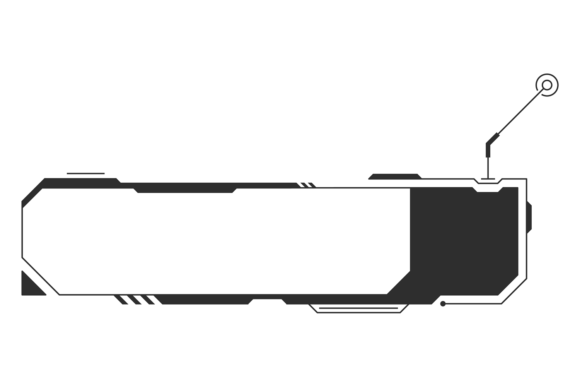
Modern Text Box Business refers to a collection of pre-designed graphical elements used to frame, highlight, or organize textual content within presentations, reports, or digital media. These assets typically include text box frames with clean geometries, minimal ornamentation, and a contemporary aesthetic. Often bundled with complementary components such as banners, ribbons, and infographic placeholders, these resources allow users to assemble professional slides without starting from scratch.
A typical set may include four text box infographic elements designed for comparative layouts, sequential processes, or feature breakdowns. The design language is intentionally simple and minimal, making these assets versatile across industries—from corporate strategy decks to educational material. Many of these assets are distributed as vector files (SVG) or PNG files with transparent backgrounds, often at high resolutions such as 2000 px × 2000 px, ensuring crisp rendering on both screen and print.
It is important to understand that a Modern Text Box Business template is not a complete presentation template in the traditional sense. Rather, it is a modular asset kit. You insert these elements into your existing slides or design software, then customize the text, colors, and arrangement to suit your specific content.
Why Professionals Consider These Assets
Interest in Modern Text Box Business assets typically arises from a need to improve visual consistency without investing excessive time in custom design. Several practical reasons drive this interest:
- Time efficiency: Pre-designed text boxes eliminate the need to draw frames, align shapes, or select color schemes manually.
- Visual cohesion: When multiple slides require similar framing elements, using a unified set of assets creates a polished, coherent look.
- Low design overhead: Professionals without dedicated graphic design support can still produce slides that appear well-crafted.
- Scalability: Vector formats allow resizing without quality loss, which is valuable for presentations displayed on large screens or printed materials.
These factors are especially relevant for individuals who prepare presentations frequently but have limited time or design training. The assets act as a bridge between plain text slides and fully custom-designed graphics.
Key Benefits and Practical Tradeoffs
Like any design resource, Modern Text Box Business assets offer clear advantages alongside certain limitations. Understanding both sides helps you make an informed choice.
Benefits Worth Considering
- Professional appearance on a budget: High-quality vector assets are often available at low cost or even free, making them accessible to startups, consultants, and educators.
- Customization flexibility: Because the assets are typically delivered as editable vectors (SVG, AI, or EPS), you can adjust colors, sizes, and placement to match your brand guidelines.
- Transparent background support: PNG files with transparency allow you to overlay text boxes onto existing slide backgrounds, images, or gradients without awkward borders.
- Consistent infographic capability: When you need to present data or comparisons across four distinct points, the four text box infographic layout provides a natural framework.
Tradeoffs to Keep in Mind
- Generic styling risk: Because these assets are widely available, there is a chance your presentation may look similar to others using the same kit. Customization is essential to avoid this.
- Limited contextual adaptation: The text box shapes are designed for general use. For highly specialized content—such as technical diagrams or complex workflows—you may find the preset structures restrictive.
- Software compatibility: SVG files are broadly supported, but some older presentation tools may not handle them gracefully. Always verify that your workflow supports the file format you choose.
- Resolution considerations: While 2000 px × 2000 px PNG assets are adequate for most presentations, ultra-high-resolution displays or large-format printing may require vector sources for best results.
These tradeoffs are not dealbreakers for most users, but they underscore the importance of evaluating whether a given asset set truly fits your specific use case.
Characteristics of the Modern Text Box Aesthetic
When you examine a Modern Text Box Business set, you will notice several recurring design traits. These are not accidental—they reflect current trends in presentation design that prioritize clarity and simplicity.
- Clean lines and minimal ornamentation: Decorative flourishes are kept to a minimum. Rectangles, rounded corners, and subtle borders dominate.
- Bold but restrained color usage: Many sets employ a limited palette—often two to four colors—to maintain a cohesive look. Gradient fills are less common than flat or subtly shaded backgrounds.
- Modular ribbon and banner elements: Ribbons or banner shapes are frequently included as accent pieces. These can be used to highlight statistics, labels, or headings without overwhelming the main content.
- Emphasis on negative space: The text boxes are designed with generous internal padding, ensuring that inserted text remains readable and visually comfortable.
This design philosophy works well for audiences accustomed to clean, digital-first communication. However, if your stakeholders prefer a more traditional or ornate presentation style—common in certain legal, academic, or conservative corporate environments—the minimal aesthetic may feel insufficiently formal.
When Modern Text Box Business Assets Are a Strong Fit
Certain presentation scenarios align particularly well with what Modern Text Box Business assets offer. Recognizing these situations helps you deploy the assets where they add the most value.
- Internal team updates: Weekly status reports, project reviews, and departmental updates benefit from consistent, quickly assembled slides. The assets reduce the friction of slide creation.
- Educational content: Training materials, workshop slides, and lecture notes require clarity over decoration. The minimal design helps learners focus on content rather than visual noise.
- Pitch decks and investor presentations: While these require high polish, the clean layout of modern text boxes can present business metrics and value propositions without distraction. Customization to match brand colors is strongly advised.
- Infographic summaries: When you need to communicate four key points, processes, or comparisons, the built-in four text box infographic structure provides a ready-made framework.
- Social media graphics and digital handouts: Transparent PNG and SVG formats allow easy repurposing of the assets for LinkedIn posts, email headers, or one-page summaries.
In these contexts, the assets serve as a productivity tool rather than a design crutch. They help you maintain a baseline quality while focusing your energy on content development.
When Alternatives May Be Worth Considering
For all their utility, Modern Text Box Business assets are not universally optimal. There are situations where alternative approaches may serve you better.
- Highly branded presentations: If your organization has strict brand guidelines with custom typography, proprietary color systems, and specific layout rules, generic text box assets may require excessive modification to comply. A custom-built template or dedicated presentation tool may be more efficient.
- Complex data visualization: When your content involves intricate charts, network diagrams, or layered data, preset text boxes can become limiting. Specialized infographic software or custom vector illustrations may be necessary.
- Interactive or non-linear presentations: Modern tools like Prezi, Canva, or web-based slide decks often rely on dynamic layouts that do not conform to static text box placements. In these environments, flexible design systems are more suitable.
- Budget-conscious users with existing templates: If your organization already has a robust presentation template library, adding another asset set may create redundancy rather than value. Evaluate whether your current resources already cover the same needs.
- Print-heavy projects: For brochures, posters, or large-format prints, text boxes designed for screen use may not scale elegantly. Vector source files help, but the default proportions and spacing are often optimized for slides.
The key is to assess your workflow holistically. If the assets solve a genuine gap in your process, they are a worthwhile addition. If they duplicate existing capabilities, they may add unnecessary complexity.
Practical Decision-Making Insights
To determine whether Modern Text Box Business assets align with your goals, consider these evaluation criteria before making a purchase or download:
- Audience expectations: Will your audience appreciate a clean, minimal aesthetic, or do they expect a more elaborate visual presentation? If unsure, test a sample slide with stakeholders.
- Frequency of use: If you create presentations weekly or monthly, the time savings from using pre-built assets compound quickly. For occasional use, the investment may be less justified.
- Technical compatibility: Verify that the file format (SVG, PNG, AI, EPS) works seamlessly with your presentation software. Test a sample file before committing to a full set.
- Customization effort: Estimate how much time you will need to adjust colors, typography, and layout to match your brand. If the required customization is extensive, the efficiency advantage diminishes.
- Longevity of design: Minimalist assets tend to age well compared to trend-heavy designs. However, even minimalism evolves. Choose sets with timeless proportions and neutral color palettes if you plan to use them over several years.
A practical approach is to start with a single set of Modern Text Box Business assets and use them in one presentation. Evaluate whether the workflow improvement meets your expectations. If the result is positive, expand your library. If not, you have only made a modest investment.
How These Assets Fit into a Broader Presentation Strategy
Adopting Modern Text Box Business assets should not be an isolated decision. Consider how they integrate with your overall presentation methodology:
- Pair with consistent typography: The best text boxes cannot compensate for poor font choices. Use no more than two typefaces—one for headings, one for body text—and ensure they are legible at presentation distances.
- Use color intentionally: If the asset set includes multiple color variations, choose a palette that aligns with your content's tone. Blue conveys trust and stability; green suggests growth; red draws attention but should be used sparingly.
- Respect the asset's intended structure: The four text box infographic layout works well for four points. Avoid forcing five or six items into the same framework. Instead, duplicate the slide or use a different layout.
- Maintain visual hierarchy: When placing text within the boxes, keep headlines short and body text concise. The asset provides the container; your content provides the substance.
By treating these assets as a component of a broader system—rather than a complete solution—you maximize their utility while avoiding common pitfalls such as overcrowding or inconsistent styling.
Final Considerations for Decision-Making
Modern Text Box Business assets are best understood as a practical tool for improving presentation efficiency and visual consistency. They are not a substitute for thoughtful content, nor are they a guarantee of audience engagement. However, for professionals who regularly need to produce clean, structured slides with minimal effort, they offer a compelling value proposition.
Evaluate your specific needs: how much time do you spend on slide formatting? How consistent is your current presentation output? Do you have the design skills to create similar elements from scratch? If the answer indicates that a ready-made solution would meaningfully reduce friction or improve quality, then these assets are worth integrating into your workflow.
Conversely, if you already maintain a thorough template library, have dedicated design support, or work with highly customized visual content, the incremental benefit may be marginal. In that case, focusing on content refinement or audience research may yield a better return on effort.
Ultimately, the decision rests on whether the assets help you communicate more effectively with your audience. Practical testing, honest assessment of your workflow, and a clear understanding of your presentation goals will guide you to the right choice.