Building Manufacturing Vertical Banner: A Versatile Design Template
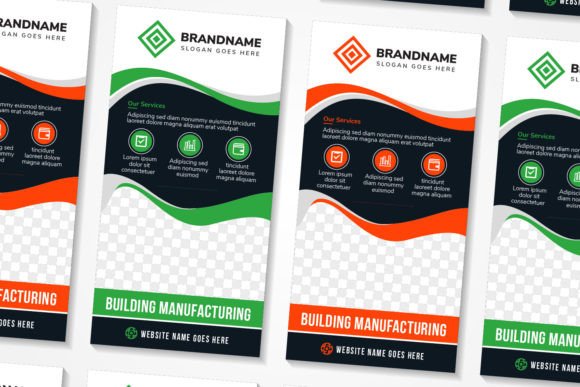
When you need a clean, professional layout for your next presentation, brochure, or brand display, the right template can save hours of work. The Building Manufacturing Vertical Banner is a vector-based graphic resource that combines modern city-view imagery with geometric shapes, wave patterns, and a refined black-and-white color palette accented with orange and green. Designed at 300 dpi with fully editable text, shapes, and colors, this template works across Adobe Illustrator, EPS, SVG, and standard JPEG formats. But beyond its technical specs, what makes this template useful depends heavily on what you are trying to create, who your audience is, and how much control you need over the final design.
Understanding what this banner actually offers means looking at it from different perspectives. A beginner might see an easy way to create a polished cover sheet. A marketing professional might see a flexible framework for a campaign. An educator might see a clean visual aid for a presentation. The same file serves different purposes, and your priorities around ease of use, cost, quality, and creativity will shape whether it is the right choice for you.
What the Building Manufacturing Vertical Banner Actually Includes
This template is a multi-purpose design file built around a vertical layout. It is structured as a brochure cover set with an info banner frame, headline text fonts, and a title sheet model. The visual language leans modern and geometric, using clean lines, abstract wave motifs, and a city skyline silhouette. The color scheme stays neutral with white and black as the base, while orange and green provide accent highlights. This makes the template suitable for industries like construction, manufacturing, real estate, urban development, and corporate business communications.
The download package includes files in AI, EPS, JPG, and SVG formats. All graphics are described as 100 percent vector, meaning each element can be scaled without losing resolution. Text, shapes, and colors are editable, so you are not locked into a fixed design. The 300 dpi resolution also ensures that printed versions look sharp, whether you produce a small flyer or a large exhibition banner.
Why Different Audiences Find Value in This Template
Not everyone approaches a design template the same way. A person who has never used vector software will have different concerns than a seasoned graphic designer. A small business owner trying to produce a quick promotional sheet will prioritize speed and simplicity. A freelance creator might look for a file that allows deep customization. Understanding these differences helps you decide whether this banner aligns with your specific goals and skill level.
For Beginners and Hobbyists
If you are new to design work or just need a presentable layout without starting from scratch, this template offers a structured starting point. The editable text means you can replace placeholder headlines with your own company name or tagline. The shapes and colors are pre-arranged, so you do not need advanced skills to achieve a professional look. For a small community event flyer or a personal brand pamphlet, the black-and-white base with a pop of orange or green gives a contemporary feel that does not require a lot of tweaking.
Beginners should pay attention to the file formats. AI and EPS files require Adobe Illustrator or a compatible vector editor, while SVG files work in many free tools like Inkscape or even some web-based editors. If you do not have access to Adobe software, the JPG version still provides a high-resolution image that you can use directly, though you will not be able to edit individual elements. Knowing this upfront helps avoid frustration during the download and setup process.
For Designers and Creative Professionals
Experienced designers often evaluate templates differently. Instead of looking for a finished product, they look for a flexible framework. The vector nature of this file means you can move, resize, recolor, or remove any element. If the orange accent does not match your brand palette, you can change it to blue, red, or any custom color. The geometric shapes and wave lines can be repositioned or duplicated to create a unique layout while keeping the overall structure intact.
For a graphic designer working on a pitch deck for a construction client, the city-view brand flag element provides a visual anchor that connects to architecture and urban environments. The info banner frame can be repurposed as a sidebar for statistics or key messaging. The headline font style is readable and modern, which works well for both print and digital presentations. The key question for a professional is whether the template saves enough time to justify the cost compared to building a custom layout from scratch. In most cases, having a well-organized vector file with editable layers cuts the production time significantly, especially when you need to deliver multiple versions for different formats.
For Business Owners and Marketers
If you run a small manufacturing company, a real estate agency, or a corporate services firm, your primary concern is probably messaging and speed rather than artistic flexibility. You need a banner or flyer that communicates professionalism and trustworthiness without requiring you to become a designer overnight. The clean, modern look of this template works well for trade show displays, investor presentations, or company profile brochures.
For a business owner, the practical value comes from the ability to edit the text directly. You can input your company name, service description, contact details, and call-to-action without hiring a designer. The vertical orientation is also practical for roll-up banners, standing displays, and vertical poster frames, which are common at exhibitions and conferences. If your goal is to present your brand as contemporary and well-organized, the geometric and wave elements reinforce that perception without feeling overly decorative.
Marketers should consider how the same template can be adapted across channels. The AI file for print, the SVG for web use, and the JPG for social media previews provide a consistent visual identity. Having all these formats in one download means you are not scrambling to convert files or recreate graphics for different platforms. The 300 dpi resolution also ensures that your printed materials remain crisp even at larger sizes.
For Educators and Publishers
Teachers, trainers, and content creators who produce educational materials often need layouts that are clear, uncluttered, and easy to read. The Building Manufacturing Vertical Banner can serve as a cover page for course handouts, training manuals, or workshop booklets. The city-view imagery provides a contextual backdrop for topics related to urban planning, engineering, construction management, or manufacturing processes.
Educators may prioritize the ability to modify the color scheme to align with institutional branding. The editable shapes allow you to add icons or diagrams relevant to your lesson. The abstract wave pattern can also be used as a visual separator between sections. Since the files come in SVG format, you can import them into presentation software like PowerPoint or Google Slides and make adjustments without needing a full design suite. The learning value here lies in having a professional-looking resource that does not distract from the content itself.
Technical Considerations and Quality Factors
When evaluating any graphic template, certain technical aspects matter across all user groups. File compatibility is at the top. The inclusion of AI, EPS, JPG, and SVG covers most scenarios, but if you work exclusively with Figma, Photoshop, or Canva, you may need to check whether the SVG or JPG versions meet your needs. EPS files can sometimes be imported into design programs that do not natively support AI, but this is not guaranteed with every tool.
The vector claim is important because it means you can scale the graphics without pixelation. This is critical for large-format printing like banners and posters. At 300 dpi, the JPG is suitable for print, but for maximum editing control, the AI or EPS files are the better choice. If you plan to change fonts, colors, or layout positions, working with the vector files is the only way to maintain the original quality.
Cost is another factor. Beginners and hobbyists may find the price reasonable compared to hiring a designer for a one-off project. Professionals might compare it to subscription-based template libraries. For a business, the cost is often justified by the time saved. Ask yourself how many different uses you will get out of this template. If you only need one brochure, even a modest investment should be weighed against the effort of designing from scratch. If you anticipate needing multiple variations or future updates, the editable vector file becomes more valuable over time.
How to Decide If This Template Matches Your Project
Before you download, take a moment to match your needs against what this template provides. Start with format requirements. Do you need a vertical layout? If your display or print format is horizontal, this file may not fit without significant rework. Second, consider your editing tools. If you do not have vector editing software, you will rely on the JPG, which limits your ability to customize. Third, think about the visual style. The black-white-orange-green palette with geometric and wave elements feels contemporary and slightly industrial. If your brand uses softer tones or a more organic aesthetic, you might need to adjust the colors extensively.
For creators who want a fast result with minimal effort, this template is a good candidate. The organized layers and editable text reduce the learning curve. For a professional who needs a very specific color palette or layout that differs significantly from the original, custom design might still be faster than reworking a template. For a hobbyist creating a one-time poster for a local event, the JPG version alone could be enough to produce a satisfactory result without learning new software.
The long-term usefulness comes from the versatility of vector files. You can archive the AI file and reuse it as a base for future projects. Changing the background, swapping out the city view for another graphic, or adjusting the banner frame for a different aspect ratio are all possible when you have the original layers intact. This makes the template more than a single-use resource if you are willing to invest a small amount of time learning how to navigate the file structure.
Final Thoughts on Versatility and Practical Application
Whether you are preparing materials for a manufacturing trade show, designing a company brochure, creating a presentation cover, or building a display for a real estate open house, the Building Manufacturing Vertical Banner provides a professional foundation that balances structure with flexibility. The combination of vector scalability, multi-format support, and editable components means you can adapt the same file to printed banners, digital documents, and social media graphics without needing to reinvent the layout each time.
The best template for any project is the one that fits your skill level, your tools, and your timeline. This banner leans toward users who value clean geometry, modern typography, and a neutral-to-bold color palette. If that matches your vision, the included formats give you room to grow into more advanced edits as your confidence with vector software increases. And if you ever run into questions about layer organization or color adjustments, the editable nature of the file means you can experiment freely without permanently altering the original design.
Thank you for taking the time to explore what this resource offers. I wish you a good day and success with your design projects. Please contact me if you have any questions about file compatibility, customization possibilities, or print setup recommendations.